Reviewing the Christmas Embroidery Tumbler Winter Design
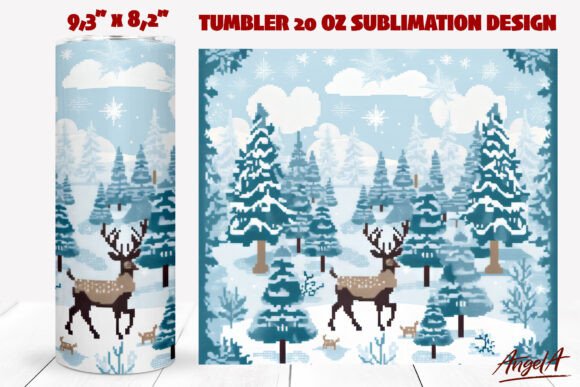
As an embroidery designer who has spent countless weekends behind a craft fair table, I know that visual impact is everything. When customers walk past your booth, you have seconds to catch their eye. Recently, I came across a digital asset titled Christmas Embroidery Tumbler Winter. While the name suggests it is intended for sublimation on drinkware, my mind immediately went to how this aesthetic could translate into a high-value craft fair product for the holiday season. The description notes it is a Christmas scene with deer in a winter forest, provided as a PNG file at 300 dpi. For those of us in the handmade community, understanding how to adapt these visual themes into stitched goods is key to standing out.
First Impressions and Aesthetic Appeal
The core of this design revolves around a serene winter forest scene featuring deer. In the world of Graphics and Tumbler Wraps, this imagery is popular because it evokes nostalgia and warmth. When I visualize this concept translated into thread, I see a piece that leans heavily into the rustic and farmhouse trends that dominate holiday markets. It is not loud or neon; it is soft, decorative, and premium. This matters because buyers at handmade markets are often looking for items that feel personal and high-quality, not mass-produced.
If you are an Etsy seller or a boutique maker, this theme offers a strong emotional hook. The deer motif is timeless, appealing to both traditionalists and modern minimalists who prefer nature-inspired decor. However, since the source file is a PNG rather than a native machine embroidery design format, we must approach this with a designer’s eye. We are not just printing; we are interpreting. The goal is to capture the mood of the winter forest without getting lost in unnecessary detail that might not stitch out cleanly.
Translating Visuals to Stitched Products
So, where does this design shine? I recommend focusing on products that offer a flat, stable surface for stitching. A tote bag design using this winter scene would be a bestseller. Imagine a natural canvas tote with the deer and forest embroidered in muted greens, browns, and whites. It becomes a reusable market bag that customers can use year after year. Similarly, apron embroidery is a fantastic avenue. A linen apron with a small, centered deer motif on the bib adds a touch of elegance to kitchen wear, making it a perfect gift for the hostess who has everything.
Do not overlook tea towel embroidery. Kitchen textiles are impulse buys at craft fairs. If you simplify the forest background to focus on the deer silhouette, you create a charming accent that doesn’t overwhelm the fabric. For smaller items, consider an embroidered patch. Patches are versatile; they can be ironed onto jackets, hats, or backpacks. By isolating the deer element from the broader winter scene, you create a compact, high-impact small shop product that is easy to produce in batches.
Pillow covers are another excellent candidate. A large hoop allowing for a detailed interpretation of the forest scene can turn a plain cushion into a festive statement piece. This works well for commercial embroidery businesses looking to expand their holiday catalog. The key is to ensure the thread colors harmonize with the fabric. Cream thread on oatmeal linen looks sophisticated, while white on navy creates a striking contrast.
Practical Production and Selling Points
When preparing for a busy holiday market, efficiency is crucial. This design concept is highly repeatable. Once you have digitized the motif and tested your settings, you can run multiple hoops simultaneously. This batch production capability is essential for keeping your inventory stocked during the peak shopping season. Furthermore, this type of imagery photographs beautifully for online listings. A well-lit photo of an embroidered tote with the winter deer scene can serve as a powerful printable mockup or main image for your digital store, driving traffic to your physical or online shop.
However, there are technical considerations. Since the original asset is a PNG, you will need to digitize it yourself or hire a digitizer. Pay close attention to stitch density. A complex forest scene can become a mess of threads if the density is too high, leading to puckering or needle breaks. Conversely, if the density is too low, the fabric may show through, ruining the illusion of a dense winter coat or forest foliage. Always test on scrap fabric first. Check how the threads interact with the fabric texture. Terry cloth towels, for example, require different stabilizing than smooth cotton canvas.
Design Challenges and Careful Use Notes
One major challenge with intricate scenes is scale. Tiny details in the original PNG, such as distant trees or fine antler branches, may not translate well to embroidery. Small lettering or fine lines can get lost or break easily. I advise simplifying the design. Focus on the main subject—the deer—and use satin stitches or simple fill stitches for the background elements. Avoid dense stitch areas on curved surfaces like caps, as this can cause distortion. If you do embroider on caps, use a stiff stabilizer and keep the design size moderate.
Dark fabrics present another hurdle. If you want to stitch this design on a black or navy tote, you must ensure your thread colors have enough contrast. Light grays and whites will pop, but mid-tones may disappear. Always do a test stitch on the actual garment color you plan to sell. Additionally, confirm the hoop size required for your final product. A large pillow cover allows for a 5x7 or 6x10 hoop, giving you room for detail, while a patch might limit you to a 4x4 hoop, requiring significant simplification of the original image.
Boosting Brand Consistency and Buyer Engagement
Using a cohesive theme like Christmas Embroidery Tumbler Winter across your product line strengthens your brand. When customers see matching motifs on tote bags, pillows, and patches, they perceive your booth as curated and professional. This visual consistency increases buyer engagement and encourages multiple purchases. It tells a story of a cozy, rustic winter that customers want to take home.
For design assets and digital sellers, offering this as a finished digital embroidery file alongside physical goods can diversify your income stream. Many home embroiderers look for ready-to-stitch files for their own projects. By providing a well-digitized version of this winter scene, you cater to the DIY community while maintaining your reputation for quality.
In conclusion, while the source material is labeled for sublimation, the artistic value of the winter deer scene is undeniable for embroidery. With careful digitizing, attention to stitch density, and smart product selection, this design can become a staple of your holiday collection. Remember to check commercial licensing terms if you are using third-party graphics as inspiration, and always prioritize clarity and contrast in your final stitched product. Your customers are buying the feeling of the season, and a well-executed embroidery piece delivers that feeling in a tangible, lasting way.